Six of Swords Card as Advice
Direct Answer
Do: Prioritize a calm, strategic exit from what is draining you. Choose the quieter path, even if your emotions want a dramatic confrontation. Make a specific transition plan: what you are leaving, by when, and what support you need. Create more emotional distance from conflict while you finish practical steps in the background.
Also do: Speak only to people who can actually help. Simplify routines, reduce noise, and give yourself mental space. Treat this as a crossing, not a permanent verdict on your worth.
Avoid: Rehashing the same arguments, stalking old messages, or trying to fix people who show no real change. Do not delay because you hope conditions will magically improve. Avoid sudden, reckless exits fueled by rage instead of clarity.
Why This Card Gives This Message
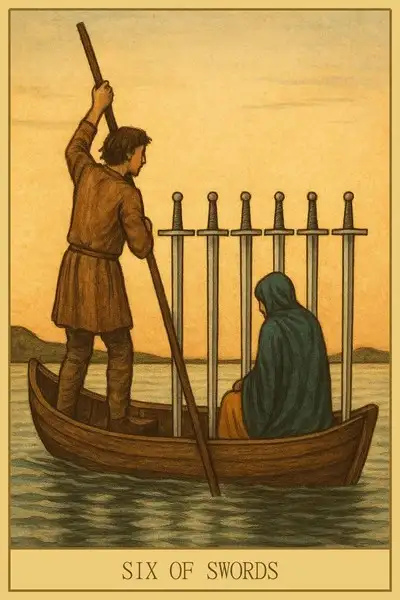
Six of Swords appears when your energy is stuck in choppy emotional waters and the smartest move is to steer out, not fight the waves. It highlights a situation that is unlikely to improve through more debate, analysis, or self sacrifice. Remaining where you are keeps you in survival mode, always reacting.
This card emphasizes that a better shore exists but is not yet visible from where you stand. You are not required to fix every loose end before you go. The priority is stabilizing your mind and nervous system so you can think clearly again.
Its message is practical compassion: protect your peace first, then handle logistics. The healing comes from increasing distance from the problem, not from winning within it.
When the Message Changes
The advice of Six of Swords shifts if you are already in the middle of a transition. If you have recently left a job, relationship, or belief system, the message becomes: stay the course and do not swim back just because the unknown feels uncomfortable.
If surrounding cards or your situation show clear, consistent effort from others to improve dynamics, the card can soften into: move away from old thinking patterns instead of the entire situation. In that case, it asks for emotional detachment, not total departure.
The message also changes once you reach calmer ground. Then it can point to processing what happened, integrating lessons, and choosing not to recreate the same conditions in your next chapter.
How to Work With This Energy
First, name what you are crossing away from: a dynamic, habit, or environment. Put it in writing so you stop arguing with yourself in circles. Decide on three non negotiable boundaries that will protect your peace as you move forward.
Next, build a bridge, not a leap. Break the transition into manageable stages and timelines. For example: reduce contact, delegate tasks, set an end date, research alternatives. Small, consistent actions matter more than one dramatic decision.
Support your nervous system. Prioritize sleep, quiet time, and neutral activities that do not stir intense emotion. Speak about your plans only with those who respect your need for calm.
Treat temporary loneliness as a sign you are between shores, not as proof you made the wrong choice.
Explore the Full Meaning and Your Next Step
If this advice resonates, your next step is to deepen your understanding of what this transition is really asking from you. Read the broader symbolism, upright and reversed themes, and how they play out in love, work, and personal healing on the main card page: Six of Swords.
When you are ready to apply this message to your exact situation, consider a focused layout that explores what to leave behind, what to carry, and what to move toward. You can get structured guidance and positions tailored to this card's energy by starting a Tarot Reading.