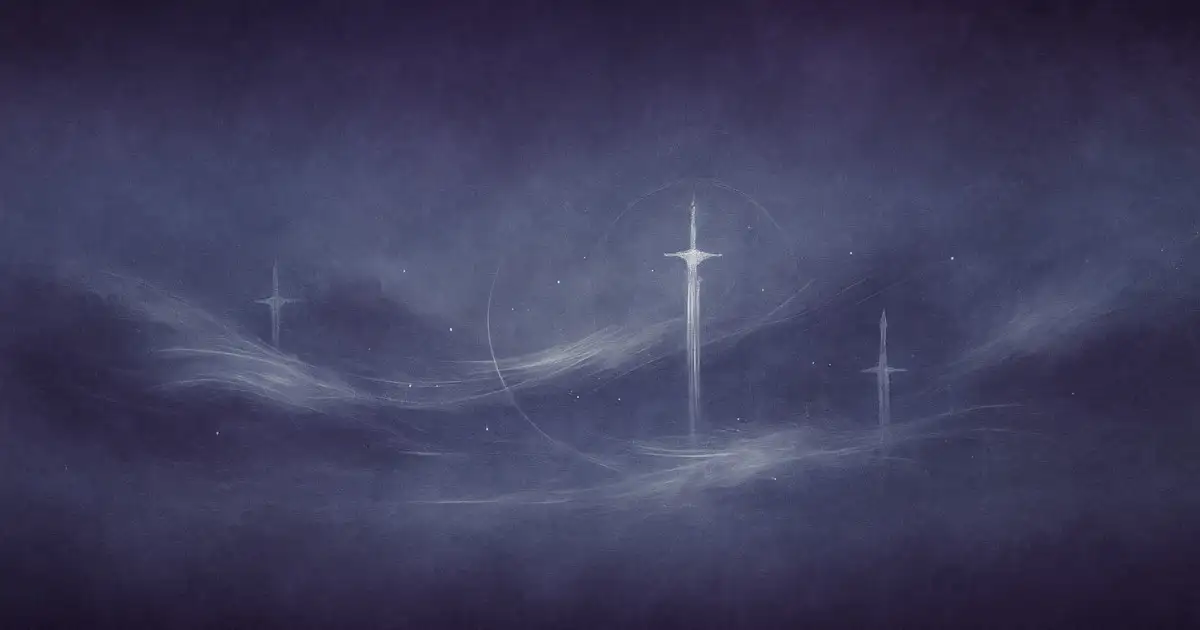
Suit of Swords
Introduction to the Swords Suit in Tarot
The Swords suit in tarot is the sharp edge of the mind: thought, logic, truth, conflict, and decision-making. Associated with the Air element, Swords cut through illusions and ask direct questions: What is really happening? What is the truth beneath the story? When Swords appear in a tarot reading, they highlight how you think, communicate, choose, and sometimes overthink.
This suit includes 14 tarot cards: the Ace of Swords, Two of Swords, Three of Swords, Four of Swords, Five of Swords, Six of Swords, Seven of Swords, Eight of Swords, Nine of Swords, Ten of Swords, Page of Swords, Knight of Swords, Queen of Swords, and King of Swords. Together, these Swords cards map a journey from a fresh idea to full mental mastery.
If you are wondering "what is Swords in tarot?" think of this suit as the wind of thought and truth moving through your life. Swords unveil clarity, ethical dilemmas, communication issues, and inner challenges. In many tarot decks, they often look intense or even harsh, but their deeper tarot meaning is about facing reality, making clean decisions, and freeing yourself from mental traps.
On Simanim's Main Tarot Page, Swords are part of the Minor Arcana, which bring tarot meanings down to everyday life: conversations, conflicts, stress, plans, and problem-solving. Learning the swords suit meaning helps you interpret tarot cards with more precision, especially in questions about decisions, relationships and communication, career strategy, and personal boundaries.
Cards in Swords
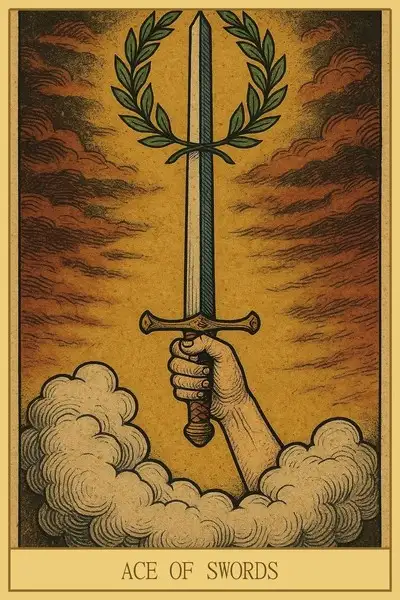
Ace of Swords
Clarity cuts through confusion. A new truth dawns with precision.
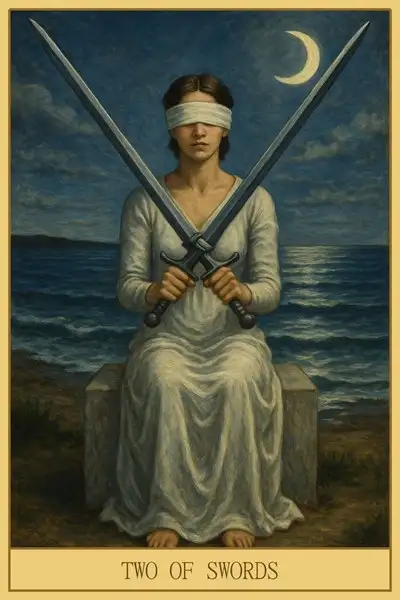
Two of Swords
A decision waits in stillness. Balance reason and intuition to choose.
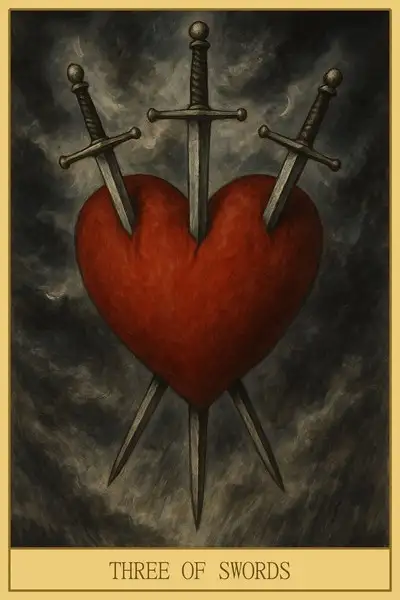
Three of Swords
Pain pierces the heart. Healing begins with honest acknowledgment.
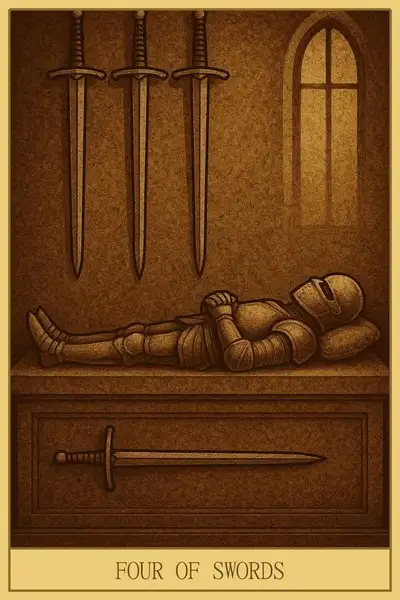
Four of Swords
Rest restores clarity. Withdraw and gather your strength.
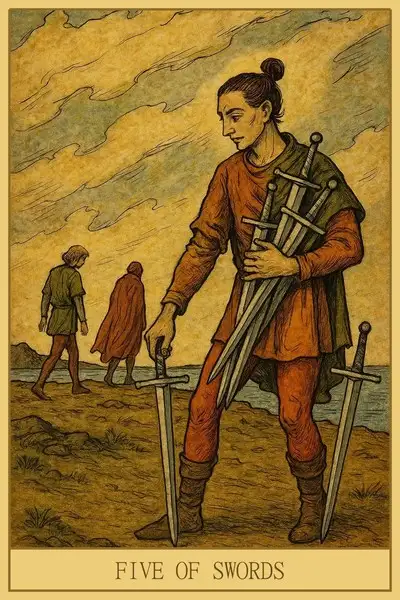
Five of Swords
Victory at a cost. Reflect before pursuing conflict or pride.
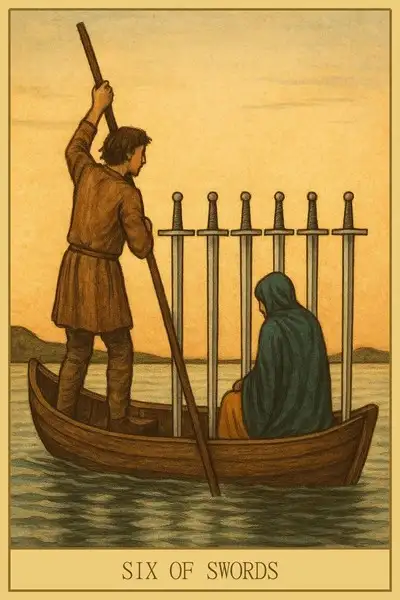
Six of Swords
Transition brings relief. Move toward calmer, clearer waters.
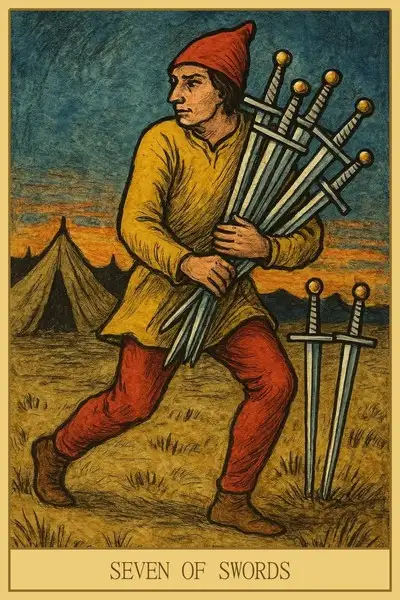
Seven of Swords
Stealth or strategy is needed. Be mindful of motives - yours or others'.
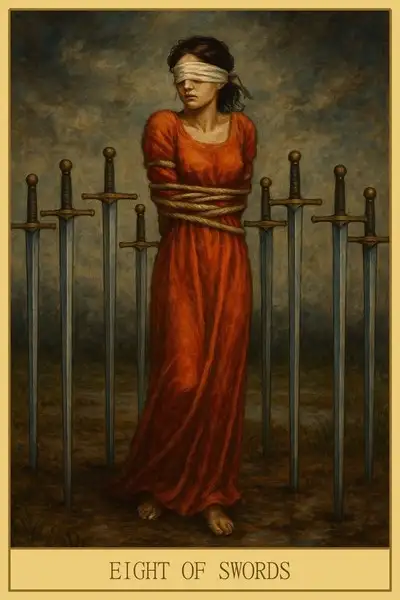
Eight of Swords
Feeling trapped is an illusion. Freedom begins with new perspective.
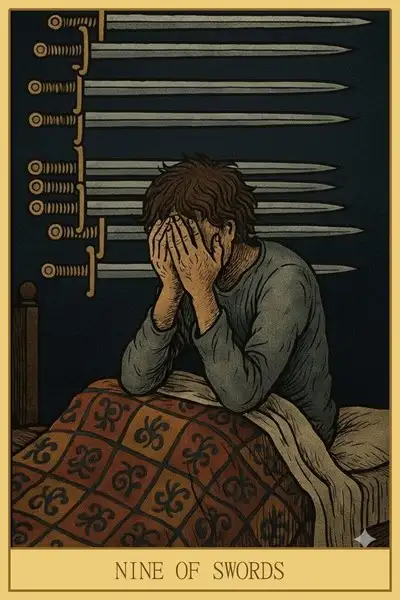
Nine of Swords
Anxieties magnify at night. Face fears gently and release worry.
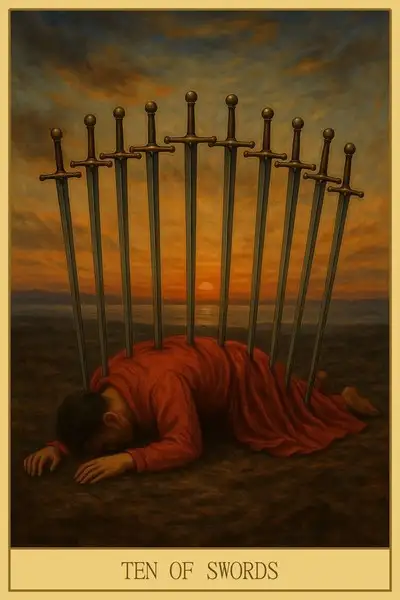
Ten of Swords
An ending has come. Let go - dawn follows even the darkest night.
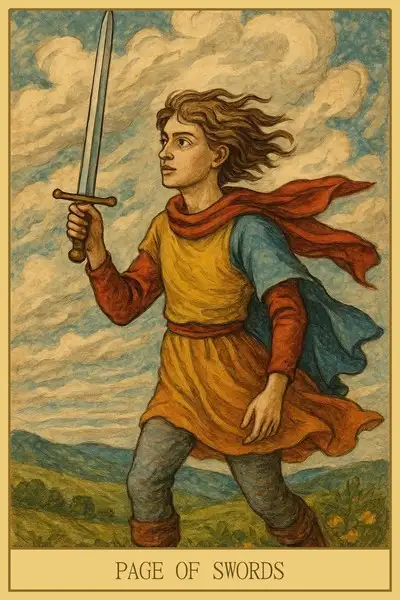
Page of Swords
Curiosity sharpens your mind. Ask questions and seek deeper truth.
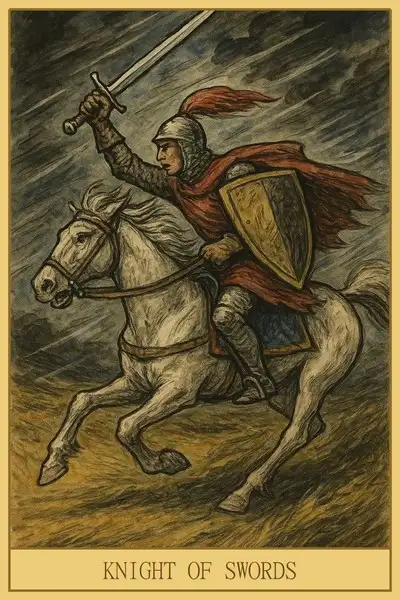
Knight of Swords
Charge forward with intellect. Just ensure clarity guides your speed.
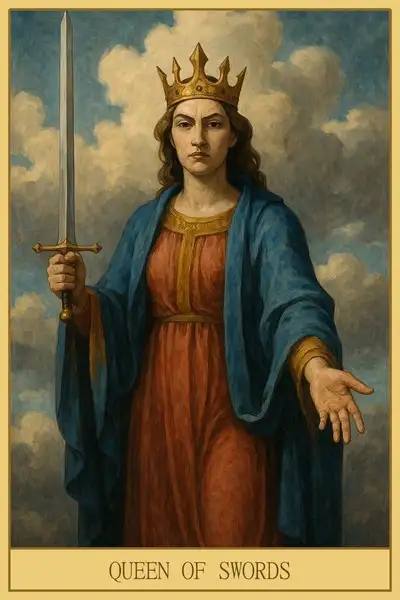
Queen of Swords
Discernment is your power. Speak truth with grace and wisdom.
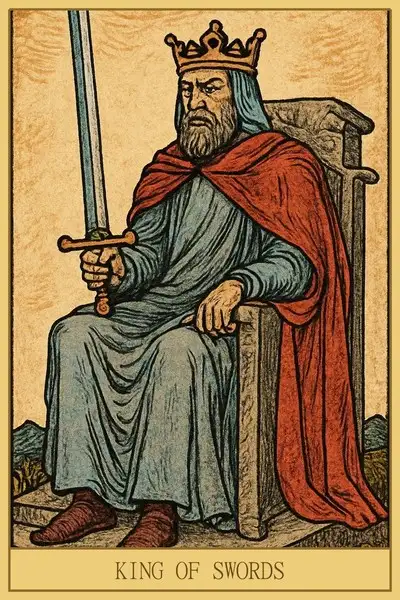
King of Swords
Authority of thought leads the way. Logic and integrity rule your choices.
The Air Element and the Swords Suit
In tarot, the Swords suit is ruled by the Air element, symbolizing thought, intellect, language, and the invisible currents of ideas that shape reality. Air is what you cannot see but can feel: a thought, a conversation, a sudden realization. When you draw Swords tarot cards, the reading often highlights how your mind is influencing your situation - for better or for worse.
Air is light, fast, and changeable. In tarot card reading, this translates into quick decisions, sharp insights, and sometimes anxiety or over-analysis. Air can refresh and clarify, but it can also scatter and confuse. Cards like the Page of Swords show curiosity and mental agility, while the Nine of Swords reflects worry, sleeplessness, and thoughts spiraling out of control.
Because Swords belong to the Minor Arcana, their Air energy plays out in daily life: emails, arguments, contracts, boundaries, and internal narratives. When you explore tarot meaning for Swords, you are exploring your relationship with truth, logic, communication, and your own inner voice. Mastering this suit means learning to think clearly without letting fear or harsh self-criticism dominate your mind.
General Meanings of Swords Cards
In a tarot reading, Swords generally point to the realm of the mind: thoughts, beliefs, decisions, and communication. Where Cups speak to emotions and Wands to passion, Swords ask: What is your mindset? What story are you telling yourself? Swords cards can reveal mental blocks, conflict, tension, and the need for clarity or honest conversation. They often show what must be confronted rather than avoided.
When Swords are balanced, their tarot meaning includes truth, fairness, analysis, and strong decision-making. The Ace of Swords can indicate a breakthrough, a new idea, or a decisive insight that cuts through confusion. Court cards like the Queen of Swords and King of Swords represent mature mental energy: clear communication, objectivity, strategy, and ethical judgment.
When Swords energy is distorted, the same tarot cards can warn of overthinking, harsh words, arguments, or self-sabotaging stories. The Three of Swords often signals heartbreak, painful truths, or necessary but difficult conversations. The Eight of Swords shows feeling trapped by your own thoughts or limiting beliefs, while the Ten of Swords depicts a dramatic ending, mental burnout, or a pattern that cannot continue.
Looked at as a group, all 14 Swords cards tell a progressive story about how we handle thoughts and conflict. Early cards (Ace through Four) focus on ideas, choices, and mental rest. The middle cards (Five through Seven) reveal tension, strategy, and ethics. The later cards (Eight through Ten) expose mental suffering and the potential for release. Finally, the Page, Knight, Queen, and King of Swords show how we learn, test, refine, and fully embody mental mastery. Understanding how these tarot cards connect will deepen your tarot interpretation in any spread.
Common Themes and Symbols in Swords
Across a tarot deck, Swords are linked with imagery of blades, clouds, storms, and open skies. The sword itself is a double-edged symbol: it can defend truth or inflict harm, depending on how it is used. This reflects a core swords suit meaning - your mind can liberate you with clarity, or wound you with criticism and fear. Clouds and stormy skies often appear behind Swords cards, symbolizing confusion, tension, or a situation that needs clear thinking to resolve.
Common themes in Swords include conflict, justice, boundaries, and communication. Cards like the Five of Swords and Seven of Swords can point to arguments, questionable tactics, or miscommunication, reminding you to examine motives and integrity. Meanwhile, the Six of Swords shows transition and mental healing - a journey away from turmoil toward calmer waters.
You will also notice a pattern of internal vs. external struggle in this suit. Some tarot cards highlight outer conflict with others, while others depict inner turmoil and anxiety. The Nine of Swords, for instance, shows suffering that happens mainly in the mind, while the Knight of Swords reflects outer action driven by intense ideas or convictions. These repeating themes help you quickly recognize when a tarot reading is pointing to mindset, communication style, or the need for honest dialogue.
How to Read Swords Cards in Tarot Readings
When Swords dominate a tarot card reading, they highlight mental patterns and communication as the core of the issue. In love or relationship tarot readings, Swords can indicate the need for honest conversations, clearer boundaries, or resolving conflict. For example, the Two of Swords can show emotional stalemate or avoidance of a decision, whereas the Four of Swords can suggest taking a break from conflict to rest and reflect.
In career or money spreads, Swords tarot cards often speak to strategy, negotiations, contracts, and problem-solving. The Page of Swords might point to research, study, or gathering facts, while the King of Swords can represent a manager, advisor, legal professional, or your own need to step into rational leadership. When you ask how to read Swords cards in a practical context, look at who holds the power in the situation, how information is being shared, and whether decisions are being made from fear or from clarity.
If you want deeper, personalized tarot interpretation of the Swords suit, consider booking a professional tarot reading through Tarot Reading. An experienced reader can help you see how your unique mindset, communication style, and choices are shaping your path and how to work constructively with intense Swords energy.
Key Takeaways About the Swords Suit
The Swords suit in tarot represents the domain of mind and communication: truth, logic, conflict, and decisions. As the expression of the Air element in a tarot deck, these cards reveal how thoughts and words can cut, protect, clarify, or confuse. From the piercing insight of the Ace of Swords to the sober wisdom of the Queen of Swords, Swords challenge you to see clearly and speak honestly.
When Swords appear frequently in your tarot cards, they invite you to examine beliefs, stories, and communication patterns. Are you thinking clearly, or trapped in fear? Are you using your words to heal or to harm? Working consciously with the swords suit meaning in your tarot reading can help you move from mental chaos to clarity. If you feel called to explore these questions more deeply, a guided session through Tarot Reading can support you in translating Swords insights into real-life decisions and healthier perspectives.
Other Suits
Major Arcana
The soul's greater journey. Each Major Arcana reveals a turning point on your spiritual path.
Wands
The flame of inspiration and action. Wands reveal your drive, passion, and creative path.

Cups
The flow of feeling and connection. Cups reflect love, intuition, and the depth of your emotions.
Pentacles
The roots of stability and growth. Pentacles guide you in money, work, and the material world.